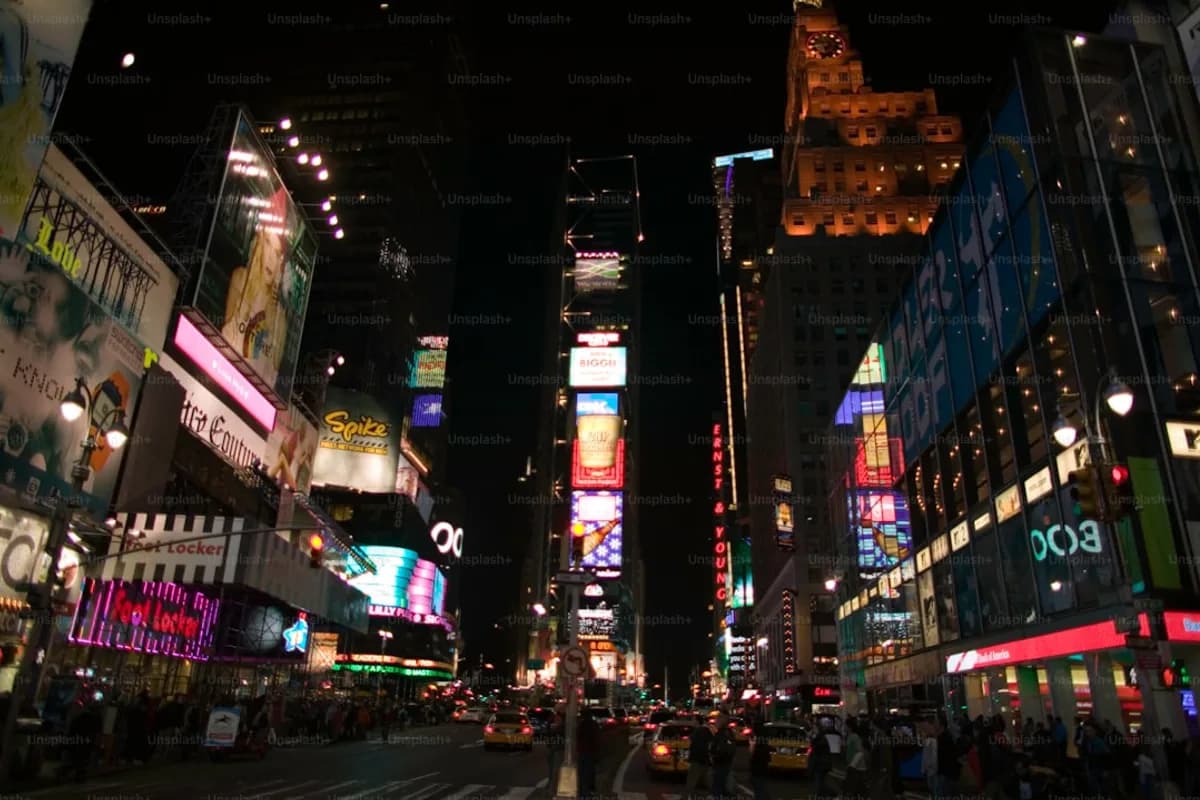
New York City for First-Timers: The Essential Guide to NYC
New York City for First-Timers: The Essential Guide to NYC
No American city is more anticipated, more written about, and more overwhelming on first arrival than New York. The sheer scale and density of experiences — the canyon of skyscrapers, the subway's constant rumble, the infinite variety of neighborhoods — can be paralyzing if you don't know where to start. This guide cuts through the noise to give you the essential NYC experience for a first visit.
Getting Your Bearings
New York City has five boroughs — Manhattan, Brooklyn, Queens, The Bronx, and Staten Island — but for most first-time visitors, Manhattan is the primary destination. Manhattan is organized along a grid: numbered streets run east-west (increasing northward), avenues run north-south. Central Park divides the island into the Upper East Side (east of the park) and Upper West Side (west of the park).
Key landmarks to orient yourself:
- Central Park runs from 59th to 110th Street in the middle of Manhattan
- Times Square is at 42nd Street and 7th Avenue
- Empire State Building at 34th Street and 5th Avenue
- Brooklyn Bridge connects Lower Manhattan to Brooklyn
The Must-See Sights
Central Park
Start any NYC visit with a morning in Central Park. The 843-acre park designed by Frederick Law Olmsted in 1858 is the city's green heart and one of the world's great urban parks. Must-do within the park:
- Bethesda Fountain and Terrace — the park's most beautiful formal space, with the Angel of Waters statue
- The Ramble — 36 acres of wild woodland paths where you can get genuinely lost
- Bow Bridge — the iconic cast iron bridge over the Lake, perfect for photographs
- Strawberry Fields — the memorial to John Lennon, across from the Dakota where he lived and died
The best time in Central Park is early morning (before 8am), when joggers, dog walkers, and tai chi practitioners have the park nearly to themselves.
The 9/11 Memorial and One World Trade Center
The twin reflecting pools built in the footprints of the original World Trade Center towers are one of the most moving memorials in America — 30-foot waterfalls cascading into square voids with the names of all 2,977 victims inscribed on the bronze parapets. The memorial is free and open daily.
The National September 11 Memorial Museum ($33 adults) tells the story of the day with artifacts, recordings, and multimedia exhibits. Allow at least 2-3 hours. One World Trade Center's observation deck (One World Observatory, $44 adults) rises 1,776 feet above the city — the "1776" feet references the year of American independence.
The Brooklyn Bridge and DUMBO
Walking across the 1883 Brooklyn Bridge is one of the great free experiences in New York. The 1.3-mile walk takes about 30 minutes and delivers spectacular views of the Manhattan skyline and the East River.
Walk from Manhattan toward Brooklyn, then explore DUMBO (Down Under the Manhattan Bridge Overpass) — the neighborhood directly under the bridge in Brooklyn, with cobblestone streets, the stunning Manhattan skyline framed by the bridge in Washington Street, and Brooklyn Bridge Park's waterfront lawns with the best Manhattan views from any public space.
Practical tip: Walk from the Manhattan side toward Brooklyn for the best skyline views ahead of you the whole way.
The Metropolitan Museum of Art
The Met is one of the world's five greatest museums — 2 million objects spanning 5,000 years of human civilization across 17 curatorial departments. Give it a full day. Essential highlights:
- Egyptian Art galleries — including the Temple of Dendur, a full ancient Egyptian temple inside the museum
- American Wing — painting and decorative arts from Colonial period through the 20th century
- European Paintings — Vermeer, Rembrandt, El Greco, and an exceptional Impressionist collection
- The Costume Institute — the fashion world's most important museum collection
- The Roof Garden — seasonal outdoor installation with extraordinary skyline views
Suggested admission: $30 adults. New York State residents and students can pay what they wish.
Times Square
Every first-time visitor is obligated to experience Times Square — the "Crossroads of the World" and most visited tourist site in the world (50+ million visitors per year). It is relentlessly commercial, overwhelmingly bright, and inescapably New York.
How to experience Times Square:
- Come at night when the LED billboards blaze at full intensity — this is when it's most spectacular
- Visit the TKTS booth in the center of the square for same-day Broadway tickets at 20-50% discount (open daily, best selection in the late afternoon)
- Eat before you reach Times Square — the restaurants here are tourist traps with inflated prices
Statue of Liberty and Ellis Island
The Statue of Liberty is the most iconic symbol of New York and America itself. To visit the statue and the island, book ferry tickets through Statue City Cruises (statecruises.com) — free with ferry but very popular.
Tips:
- Crown tickets (climbing up inside the statue) must be booked months in advance — they sell out immediately
- Pedestal tickets (inside the statue up to the pedestal observation deck) sell out weeks ahead
- Grounds tickets allow you on the island and around the statue exterior — book early
- Ellis Island is included in the ferry route — the Immigration Museum tells the story of the 12 million immigrants who passed through between 1892 and 1954
Budget alternative: The free Staten Island Ferry passes close to the Statue of Liberty and offers excellent views from the ferry deck. No reservation needed; departs from the Whitehall Terminal in Lower Manhattan.
Neighborhoods to Explore
The High Line (Chelsea)
The 1.45-mile elevated park built on a former elevated freight railroad through West Chelsea and the Meatpacking District is one of the great urban design achievements of the 21st century. Walk it from Gansevoort Street (Meatpacking District) northward through contemporary art installations, beautiful planting, and views over the Hudson River and Midtown. Free and open daily.
At the northern end, the Hudson Yards development features the Vessel sculpture (a $200 million staircase structure) and The Edge observation deck.
Brooklyn: Williamsburg and Park Slope
Brooklyn has transformed from a working-class outer borough into one of the world's most exciting urban destinations.
Williamsburg — the epicenter of New York's creative class — has Brooklyn Brewery (excellent tours and beers), dozens of excellent restaurants on Bedford Avenue and North 7th Street, and the Domino Park waterfront space with incredible Manhattan skyline views.
Park Slope and Prospect Heights are tree-lined brownstone neighborhoods around Prospect Park — the borough's Central Park equivalent. Brooklyn Museum (free first Saturday evening of each month), Brooklyn Botanic Garden, and the Brooklyn Public Library are nearby.
Greenwich Village and the West Village
Manhattan's most beautiful residential neighborhood — a grid-breaking tangle of 19th-century townhouses and literary history (Edgar Allan Poe, Henry James, Dylan Thomas all lived here). Washington Square Park at the neighborhood's heart is one of New York's great gathering spots.
Don't miss: The Bleecker Street strip for New York's best pizza; Joe's Pizza at Carmine Street (consistently voted NYC's best slice); the White Horse Tavern (since 1880).
Getting Around NYC
The Subway
The New York City Subway is the best way to get around Manhattan and the outer boroughs. It runs 24 hours, 7 days a week — one of the very few transit systems in the world that operates continuously.
Key subway facts:
- Standard fare: $2.90 using OMNY (tap any contactless card or phone)
- 7-day unlimited MetroCard: $34 (excellent value if staying a week)
- Most tourist attractions are accessible by the 1/2/3, 4/5/6, A/C/E, or N/Q/R trains
- Avoid rush hours (7-9am, 4-7pm) if possible for more comfortable rides
Useful lines for first-timers:
- A/C/E train: JFK Airport (via AirTrain), Brooklyn, World Trade Center, Midtown
- 1 train: Runs the west side of Manhattan from South Ferry to 242nd Street (Bronx)
- 6 train: Runs the east side of Manhattan through Midtown and the Upper East Side
- N/Q/R/W trains: Connect Brooklyn, Union Square, Midtown, and Times Square
Taxis and Rideshare
Yellow cabs are metered (base fare $3.00, $0.70/mile) and available throughout Manhattan. For outer boroughs, use Uber or Lyft, which are generally more reliable. Avoid hailing cabs at airports; use the metered taxi stand or rideshare pickup areas.
Eating and Drinking in NYC
Pizza
New York-style pizza is thin-crust, enormous, and eaten folded. The best pizza slice in New York is a subject of eternal debate, but these are the consensus classics:
- Joe's Pizza, Carmine Street, Greenwich Village — the benchmark NYC slice, $3.50
- Di Fara, Avenue J, Brooklyn — legendary but long lines; cash only
- Lucali, Carroll Gardens, Brooklyn — arguably the finest whole pizza in the city; no reservations
Bagels and Delis
New York bagels are different from every other bagel — hand-rolled, boiled, then baked with a distinctive chew attributed to New York City water chemistry.
- Russ & Daughters, Houston Street — the most famous appetizing store in America, serving smoked fish since 1914
- Ess-a-Bagel, Midtown East — classic, enormous bagels
- Katz's Delicatessen, Lower East Side — pastrami on rye since 1888, the most famous deli sandwich in America
Markets and Food Halls
- Chelsea Market, 15th Street — excellent food market in the former Nabisco cookie factory building
- Smorgasburg, Brooklyn Bridge Park (weekends, spring-fall) — 100+ vendors at the world's largest open-air food market
- Grand Central Terminal's lower level — the Oyster Bar and various food vendors in a stunning Beaux-Arts setting
Bars and Nightlife
- Dead Rabbit, Financial District — consistently ranked one of the world's best cocktail bars
- Employees Only, West Village — excellent classic cocktails in a speakeasy setting
- Bemelmans Bar, Carlyle Hotel, Upper East Side — classic New York bar with live piano; pricey but authentic
- McSorley's Old Ale House, East Village — NYC's oldest bar, serving dark and light ale since 1854 ($5.50/mug)
Broadway Shows
A Broadway show is a quintessential NYC experience. How to get tickets:
- TKTS booth, Times Square (opens at 3pm weekdays for evening shows; noon on matinee days) — 20-50% off same-day tickets for most shows
- TodayTix app — same-day discounts and lottery tickets
- Show websites — often sell rush tickets (same-day lottery) for as little as $30-45
- Full-price tickets from $100-350+ for major shows
Current long-running favorites: Hamilton, The Lion King, Wicked, Chicago (the revival), Hadestown. Check what's running during your visit — the Broadway lineup changes frequently.
Budget Tips for NYC
- Subway unlimited MetroCard ($34/week) — pays for itself quickly
- Free museums: The Met is pay-what-you-wish (suggested $30 for non-residents); the American Museum of Natural History is pay-what-you-wish; all Smithsonian museums are free
- Staten Island Ferry — completely free, great Statue of Liberty views
- High Line park — free
- Central Park — free
- Brooklyn Bridge walk — free
- Food: pizza by the slice ($3.50-4.50) is the original NYC fast food
- Happy hour (usually 5-7pm) at bars across the city for $5-7 cocktails
Practical Tips
- Carry a portable phone charger — you will use Google Maps constantly
- Wear comfortable shoes — you will walk 5-15 miles per day without realizing it
- Keep your subway card/OMNY in an easily accessible pocket — holding up the turnstile is a cardinal sin
- Don't stop walking on a busy sidewalk — step to the side
- Tipping 18-20% at restaurants is standard and expected
- Book popular restaurants in advance — top NYC restaurants fill up weeks ahead on OpenTable and Resy
Sample 3-Day First-Timer Itinerary
Day 1: Manhattan Classics
- Morning: Walk the Brooklyn Bridge from the Manhattan side at dawn (the best light and fewest crowds)
- Explore DUMBO and Brooklyn Bridge Park
- Midday: Return to Manhattan, grab a pizza slice in the Financial District
- Afternoon: 9/11 Memorial (free) and One World Trade Center area; walk north through Tribeca
- Evening: Take the subway to Times Square; watch the TKTS lottery from the red steps; see a Broadway show
Day 2: Museums and Parks
- Morning: Central Park — Bethesda Fountain, the Ramble, Strawberry Fields
- Midday: Grab a bagel from a deli near the park
- Afternoon: Metropolitan Museum of Art (at least 3 hours; suggested $30)
- Evening: Dinner in the West Village; drinks at Employees Only or Death & Company
Day 3: Neighborhoods and Culture
- Morning: The High Line (start at Gansevoort Street, walk north)
- Chelsea Market for lunch
- Afternoon: Take the subway to Brooklyn — explore Williamsburg, walk over the bridge back or along the East River waterfront
- Evening: Dinner in the East Village or Lower East Side; drinks at McSorley's
New York rewards those who wander off the obvious path — every block reveals a new restaurant, gallery, or moment of unexpected beauty. Don't over-plan. Allow yourself to get lost.
Sources & References
This article is based on first-hand experience and verified with the following official sources:

Go2USA Team
Exploring the USA since 2023 | All 50 states covered | Updated monthly
We are a team of travel writers and American travel enthusiasts who explore the country year-round. Our guides are based on first-hand experience, local knowledge, and verified official sources.
More about us →People Also Read
New York City Complete Guide: Neighborhoods, Attractions & Where to Stay
Complete NYC guide covering neighborhoods, top attractions, dining, accommodations & practical tips for planning your New York City trip.

Amtrak Cross-Country: Real 2026 Guide to Coast-to-Coast by Train
Can you take Amtrak coast to coast? Real 2026 routes (California Zephyr, Southwest Chief), costs ($213 coach / $1500 sleeper), and whether the 52-hour ride is worth it.

Common Reasons an ESTA Gets Denied (and How to Avoid Them)
Why ESTA applications get denied in 2026 -- the 9 official questions explained, DUI and arrest implications, typo mistakes, and what to do if you're rejected.

How Much to Tip in the USA in 2026: A Visitor's Guide
Real 2026 USA tipping amounts for restaurants, bars, hotels, taxis, Uber, barbers, and massages — with cash-vs-card math and what happens if you don't tip.
Plan Your USA Trip
Book hotels, transport, activities, and get connected with an eSIM
Some links are affiliate links. We may earn a commission at no extra cost to you.