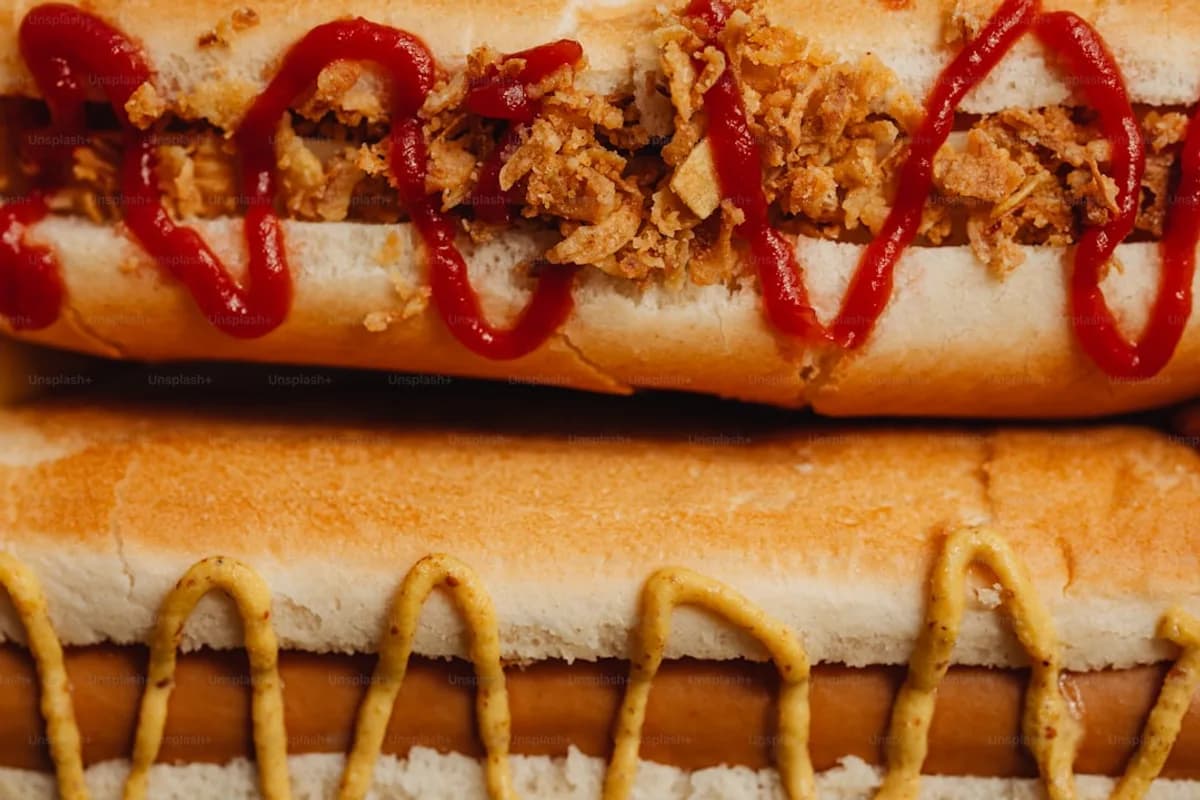
American Hot Dog
A smoked pork and beef sausage nestled in a steamed or toasted bun with your choice of condiments — from the classic New York-style (sauerkraut and brown mustard) to the iconic Chicago-style (seven specific toppings, never ketchup) to the Sonoran dog (bacon-wrapped, Arizona-style).
foodDetail.ingredients
foodDetail.mainIngredients
- Vienna beef or pork/beef hot dog
- steamed bun
- yellow or brown mustard
- ketchup (except in Chicago)
- sauerkraut (New York style)
- Chicago-style: yellow mustard, relish, onions, tomato, pickle spear, sport peppers, celery salt
foodDetail.whereToEat
Gray's Papaya, New York (legendary since 1973)
Portillo's, Chicago
Superdawg Drive-In, Chicago
Pink's Hot Dogs, Los Angeles
Dogtown Dogs, Portland, Oregon
foodDetail.priceRange
foodDetail.restaurant
$3-8
foodDetail.tips
- Never put ketchup on a Chicago-style hot dog — this is treated as a genuine offense
- The Chicago-style dog has exactly seven toppings arranged in a specific way: mustard, relish, onions, tomato, pickle, sport peppers, celery salt
- New York-style hot dog carts (gray carts with red and blue Sabrett umbrellas) are a city institution
foodDetail.culturalNotes
Hot dogs became America's ballpark food and national fast food through the 19th and early 20th centuries. German immigrants introduced the frankfurter to American cities, and the dog found its permanent home in baseball stadiums (the first ballpark hot dog was reportedly sold at Coneys Island in 1867). The Chicago-style dog was formalized during the Great Depression when vendors on Maxwell Street developed the 'garden on a bun' concept with affordable vegetable toppings. Regional hot dog styles — New York, Chicago, Coney Island, New England, Sonoran — reflect America's local food identity traditions.